
7 Honest Things a Nurse Practitioner Wants You to Know Before You Buy a Greens Powder
Are Greens Powders Worth It?
If you’ve ever stared at a $90 tub of greens powder at Target and thought, “is this actually going to do anything?” Then same. As a board-certified family nurse practitioner who has spent over a decade talking to patients about nutrition, I get asked about greens powder benefits constantly. And my answer is almost always more complicated than the influencer who sold it to you made it seem.
This post is all about greens powder benefits and more importantly, the truth about what they can and can’t do for your health.
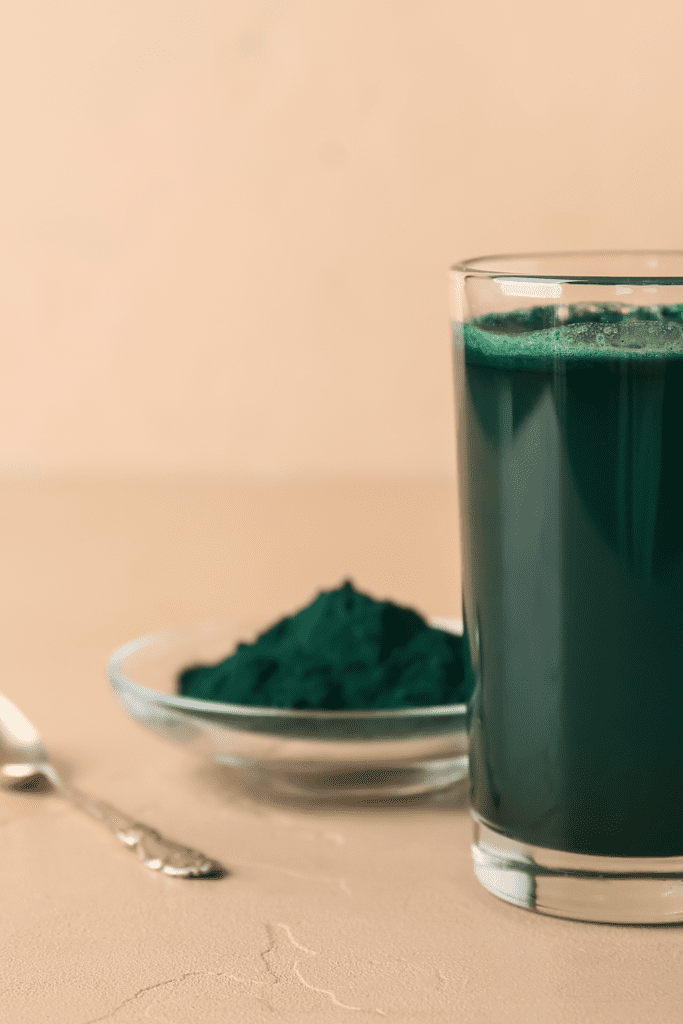
The Supplement industry lovessss your money and insecurities.
The supplement industry is a $60 billion machine that profits from one very specific thing: making you feel like you’re not enough. Like your diet is lacking. Like your labs are secretly a disaster. Like you need to be fixed.
And greens powders are one of their most polished products. The marketing is clean, the influencers are glowing, and the price tag is high enough to feel medicinal. But let’s talk about what the actual science says.

- Greens powders are not nutritionally equivalent to whole vegetables.
Not even close. Whole foods come packaged with fiber, water, and thousands of bioactive compounds that interact in ways no powder can replicate. When you blend, dry, and compress spinach into a scoop of green dust, you’re not getting the same thing. The synergy between nutrients in whole food is a big part of why plants work so well for your body. You can’t shortcut that.
- Most of the research behind these products is funded by the companies selling them.
This one matters. When greens powder brands cite studies, dig into who paid for them. Most are company-funded, use tiny sample sizes, and measure surrogate markers like antioxidant levels in a petri dish rather than actual patient health outcomes. That’s a very different thing from real clinical evidence.
- You are probably not as deficient as the marketing wants you to think.
The supplement industry profits from making you feel depleted. Most of my patients are genuinely surprised when their lab work comes back completely normal. The one nutrient Americans are actually deficient in? Fiber. And no greens powder is going to fix that. (More on that in a second.)

- Greens powders are not going to fix your fatigue or your bloating.
These are complex symptoms with complex causes. Fatigue can be thyroid dysfunction, poor sleep, under-eating, stress, or iron deficiency. Bloating can be dysbiosis, food sensitivities, constipation, or eating too fast. A scoop of greens powder is not going to untangle any of that. If you’ve been chasing vague symptoms with supplements for months and nothing has changed, that’s the data.
- Convenience is only valuable if the product actually works.
Greens powders are heavily marketed to busy moms who want a shortcut. I get it. You’re juggling a lot and a quick scoop feels like something. But if the product isn’t delivering real results and the evidence suggests most aren’t, then the convenience isn’t worth much. Real food in 10 minutes beats an expensive powder every time.

- If you’re going to use one, here’s what to look for.
Skip anything with a proprietary blend, because that’s just a way to hide how little of each ingredient is actually in there. Avoid added sugars and unnecessary fillers. Look for third-party testing certifications like NSF or USP. And honestly, that $90 a month is almost always better spent at the produce section.
The one exception I’ll make? Amla powder. Specifically, Terrasoul amla powder. Amla is a gooseberry used in Ayurvedic medicine for centuries and it is one of the most concentrated natural sources of vitamin C on the planet, with some impressive research behind it for inflammation and metabolic health. You only need a quarter teaspoon in a smoothie. It’s about $15 and it lasts months. That’s what a true superfood powder looks like.
- The nutrient gap you actually have is fiber.
I have said this a hundred times and I will keep saying it. The average American gets about 15 grams of fiber a day. The goal is 25 or more. Fiber is what feeds your gut microbiome, stabilizes blood sugar, lowers inflammation, and keeps your digestion moving. No greens powder fixes that. Whole plants do.
If you’re not sure where to start with fiber, my free 3-Day Inflammation Fix walks you through exactly how to eat in a way that closes that gap — without overhauling your whole life. And if you want to go deeper, my FREE LIVE MASTERCLASS covers the full framework I use with my patients to build a sustainable, anti-inflammatory, plant-forward diet that actually fits into a real mom’s schedule.
So Are Greens Powders Worth It?
For most people, no. The research isn’t there, the cost is high, and they’re solving a problem that mostly doesn’t exist. If you want to feel better, sleep more, eat more fiber, drink more water, and add more whole plants to your plate. That’s it.
If you want to understand exactly how to do that in a way that works for your actual life, start with the free 3-Day Inflammation Fix
Related posts you’ll want to read next:
- What Actually Happens to Your Body When You Eat 25g of Fiber a Day: https://plantedrx.com/2026/03/10/fiber-101-what-happens-when-you-eat-25g-fiber-a-day/
- The Best Anti-Inflammatory Foods (That You Can Find at Any Grocery Store): https://plantedrx.com/2026/02/27/best-anti-inflammatory-food/
- Signs Your Gut Health Is Wrecked: https://plantedrx.com/2026/03/10/health-and-wellness-signs-your-gut-health-is-wrecked/
Medical Disclaimer: This content is for informational purposes only and does not constitute medical advice. Always consult with a qualified healthcare provider before making changes to your diet or supplement routine.