
3 Longevity Foods That Fight Inflammation (And 3 Ingredients Making It Worse)
Hey y’all. Can we talk about something for a second?
You have probably been doing “the healthy thing” for years. Counting macros, buying the expensive supplements, downloading the meal plans. And you still feel tired, puffy, and kind of like your body just. will. not. cooperate.
Same, girl. Been there.
Here is the thing nobody told you: it is not about doing more. It is about knowing which longevity foods actually work, and quietly ditching the ingredients that are keeping inflammation alive behind the scenes.
I am a nurse practitioner. I geek out on this stuff for a living. And I promise you, the answer is way simpler than the wellness industry wants you to believe.
This post is all about longevity foods.
First, Let’s Talk About The Villain
Chronic inflammation is not dramatic. It does not show up with a warning label. It is just the low hum underneath everything like the fatigue you cannot shake, the brain fog at 2pm, the weight that laughs at your efforts, the joints that greet you like a grumpy roommate every morning.
And a lot of what is sitting in the average American pantry right now? Is feeding it. Every. Single. Day.
Before we get to the good stuff, let’s rip the bandaid off on a few processed food ingredients you really want to start avoiding.
3 Processed Food Ingredients That Are Not Your Friends
Sodium nitrates and nitrites. These are the preservatives in bacon, hot dogs, and deli meats. During digestion they can form compounds linked to cancer. The World Health Organization classifies processed meats as Group 1 carcinogens in the same evidence category as tobacco. Not trying to ruin your charcuterie board, just giving you the facts.
Artificial dyes like Red 40, Yellow 5, and Yellow 6 are petroleum-derived and linked to hyperactivity in children. The EU slaps a warning label on any food containing them. The US does not. Cool cool cool.
High fructose corn syrup is processed almost entirely by your liver and contributes to fatty liver disease, elevated triglycerides, and insulin resistance in ways that regular sugar does not. The sneaky part? It hides in things you would never suspect — bread, crackers, condiments. Check your labels. You will be surprised.
You are not being paranoid. You are being informed.

Okay, Now The Fun Part
No $90 supplement stack required. No detox. No weird ingredients you have to order online and wait two weeks for.
Just three longevity foods that are cheap, accessible, and backed by decades of real research. Let’s go.
1. Beans (Yes, Really. Beans.)
I know. Not glamorous. But hear me out.
A study following five separate groups of people across Japan, Sweden, Greece, and Australia found that legume intake was the only dietary factor consistently linked to longer lifespan across every single population. Not olive oil. Not fish. Not some exotic berry from the rainforest.
Beans.
They are packed with fiber, plant protein, and resistant starch that feeds your gut microbiome and keeps chronic inflammation in check. They cost like a dollar a can. They work in basically every cuisine on the planet. There is truly no downside here.
Pinto beans, black beans, chickpeas, lentils, white beans — all of it counts. Eat them often. Your future self will thank you.

(Psst — if you need help stocking your kitchen with the good stuff, check out my 10 Plant-Based Pantry Staples post.)
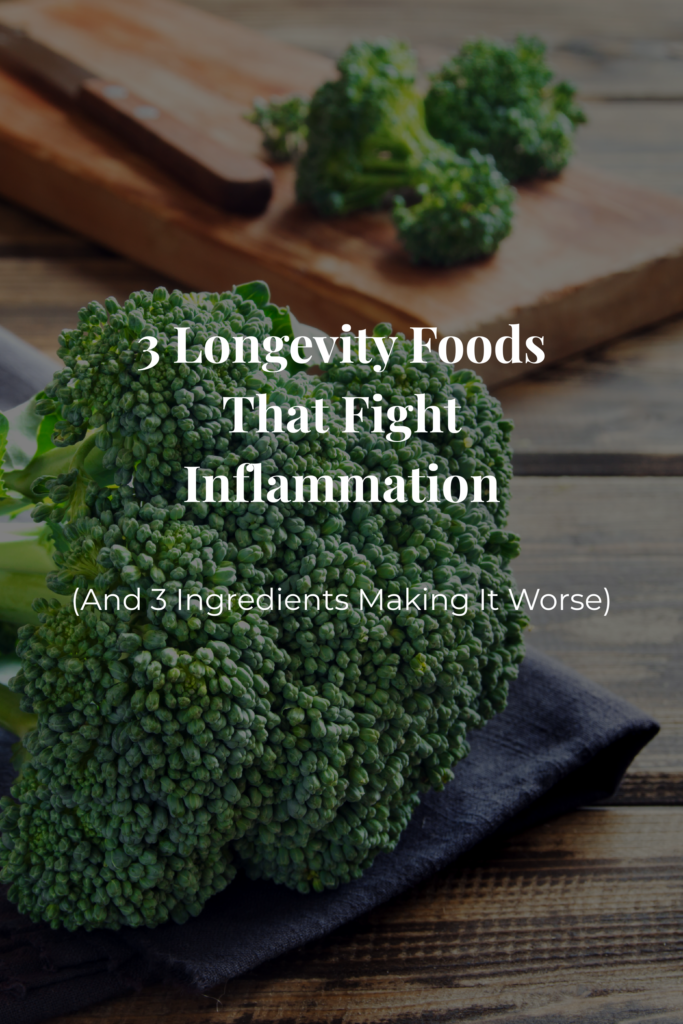
2. Broccoli
Broccoli contains something called sulforaphane, which is the most powerful natural inducer of your liver’s detoxifying enzyme system. Research shows it can target cancer stem cells, help prevent DNA damage, and reduce risk across multiple cancer types.
This is not a trend. This is biochemistry.
Roast it with olive oil and garlic. Throw it in a stir fry. Eat it raw with hummus if that is your vibe. I am not here to judge. Just eat it regularly and let it do its thing.
3. Blueberries
That deep blue-purple color is not just pretty — it is literally the antioxidant. Blueberries get their hue from anthocyanins, and regular intake is linked to reduced risk of cardiovascular disease, type 2 diabetes, cognitive decline, and early death.
The rule: the darker the berry, the higher the anthocyanin content. This is why I am obsessed with Wyman’s frozen wild blueberries. They are smaller and darker than the big conventional ones you find at most grocery stores, which means more of the good stuff per bite. And frozen is just as nutritious as fresh and often more affordable too.
Throw them in your oatmeal, blend them into a smoothie, or honestly just eat them straight from the freezer like a snack because that is what I do and I have zero regrets.
The Bottom Line
Longevity is not built in a supplement bottle. It is built at the dinner table, one meal at a time.
Every single meal either feeds chronic inflammation or fights it. Beans, broccoli, and blueberries are three of the most well-researched foods on the planet, they are available at every grocery store, and they are affordable enough to eat every week without blowing your grocery budget.
Most Americans eat roughly half the fiber they need daily. Higher fiber intake is consistently linked to lower all-cause mortality. That stat should honestly be on billboards. If you want to go deeper on why fiber is the real MVP, go read my Fiber 101 post next.
You do not have to overhaul your whole life. You just have to start adding the right things in.
Want a done-for-you plan to make this easy?
Grab my free 3-Day Inflammation Fix — three days of anti-inflammatory, plant-based meals designed for real life. No fancy ingredients, no hours in the kitchen, no overwhelm.
It is free, it takes two minutes to download, and it will show you exactly what eating for your long-term health actually looks like in practice.
Download the Free 3-Day Inflammation Fix
Related Posts:
- The Best Anti-Inflammatory Foods (Backed by a Nurse Practitioner)
- How to Eat 25 Grams of Fiber a Day Without Trying That Hard
- 10 Plant-Based Pantry Staples You Need in Your Kitchen Right Now
Medical Disclaimer: I am a board-certified family nurse practitioner, but I am not your provider. The content on this blog is for educational purposes only and is not intended as medical advice. Always consult with your own healthcare provider before making changes to your diet or health routine.